

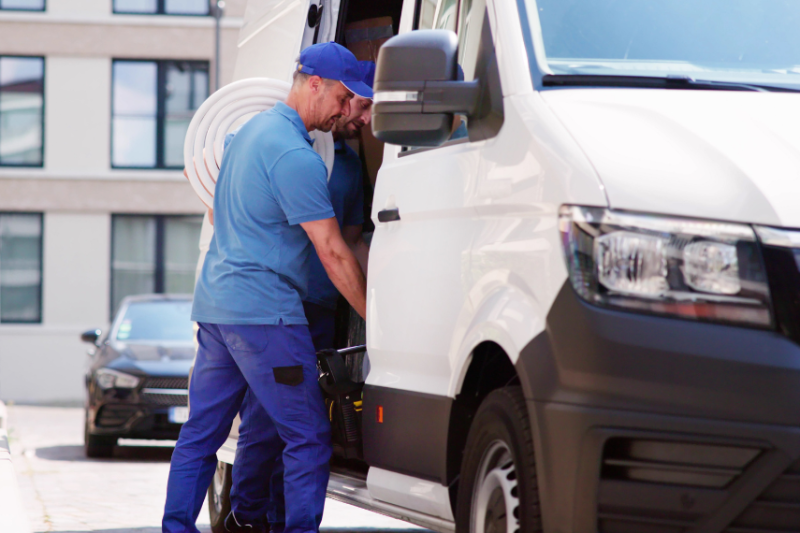
Loading a van might seem like a simple job. But there are a few things to keep in mind so you and your van stay out of harm’s way.
Use our guide to load your van safely.
What are the risks of not loading your van properly?
Here are a few of the risks you could run into if you don’t load your van correctly.
Falling loose objects
If you’re driving a pickup van with an open back, you could put other drivers at risk if things aren’t tied down properly.
Damaging goods
If you’re driving fragile goods, you can easily damage them if they’re not secure.
Going over the weight limit
Every van has a maximum weight limit for loading that you legally shouldn’t go over. These limits are there to make sure the van is still safe to drive and isn’t carrying more than it can handle.
If a van is loaded beyond its limit, it can become difficult to handle on the road. This can lead to:
- less controlled steering
- longer braking times
- tyre blowouts
In some cases, your van could even tip over if the load is too much to handle when it turns.
Damaging your van
Driving a van with too much weight can damage your:
- wheels
- suspension
- brakes
- transmission
Problems with these parts of your van can be very costly.
You could get fined if your van carries more than its weight limit because it's against the law. It might also mean you won’t be able to claim for any damage caused by an overloaded van (depending on your insurer).
How much weight can your van carry?
Every van has a different weight limit. This is either called the Gross Vehicle Weight (GVW) or MAM (Maximum Authorised Mass). They’re both the same thing but just have different names.
To find out what your van’s GVW or MAM is, you should check the vehicle handbook or the statutory weight plate.
You’ll find the statutory weight plate in one of the following places:
- under the bonnet
- in the passenger door frame or lip
- at the bottom of the windscreen
Do electric vans have weight limits?
Yes – like petrol and diesel vans, electric vans have their own GVW or MAM weight limits.
Because the battery already adds more weight, an electric van’s weight limit is usually less than a petrol or diesel van.
Make sure you always check the maximum weight limit of your van in the handbook or on the statutory weight plate.
Check out our electric van guide to learn more about their pros and cons.
How to load your van safely
Follow these steps to load your van safely as possible.
Park safely
Be careful when you’re loading a van near oncoming traffic, especially if you’re carrying heavy items.
Make sure you’re parked away from traffic and on flat, even ground.
If you need to load your van on the side of the road, check you’re not in a no-stopping or no-loading zone. If you’ve got someone with you, ask them to keep an eye on the traffic while you’re loading the van.
Choose your tether method
A tether is the material you use to tie down items. It’s important to tie down items in a van to make sure they’re not bumping around while you’re driving. Common tethering options include:
- cargo nets – for multiple smaller items and parcels
- cam buckle straps – for lighter items like clothing and upholstery
- ratchet straps – for heavier items like machinery and furniture
- non-slip mats – for small toolboxes and equipment cases
- pallet forks – for building materials and moving larger loads like bulk supplies
If you’re driving a delivery or courier van for a company, they’ll probably give you the tethering items you need.
Make sure the load is even
An uneven load makes it harder to handle your van while on the road.
Make sure you evenly spread the weight out across your van. Put the heavier items on both sides and keep them closer to the floor to help your van stay balanced.
Remember to drive safely with a loaded van
A loaded van will have a lot more extra weight to carry around, so be extra careful when you drive it.
When you’re driving a loaded van, make sure you:
- check everything’s secured before setting off
- plan your route so you’re comfortable with it
- turn and brake gently
- drive at a lower speed than usual
How to unload a van safely
Unloading a van safely is just as important as loading it! Put safety first and follow these steps:
Park safely
Park at a safe and secure stop. Make sure you’re not in the way of traffic and the ground is flat and even for you to unload.
Wear gloves
Some items might have broken, come loose or spilled during your journey.
Wear protective gloves when unloading your van, just in case.
Work from the top down
Start removing items from the top of the load first. These should be the lightest items, with heavier items packed underneath.
Don’t carry too much
It’s tempting to carry more at once to save time unloading, but this can be dangerous. Taking a little extra time can help you avoid accidents or injuries.
Only carry what you can comfortably handle. If an item affects your balance or blocks your view, ask someone else to help carry it, or use equipment like a pallet fork move it safely.
Want to find more van tips you may not know about? Head to our van resources page.