
Mirror, Signal, Mistake
Your kids inherit a lot from you.
Don’t make bad driving one of them.
Did you know your kids start learning to drive long before their hands ever touch a steering wheel? From a young age, they start picking up your habits - including what they see you doing while they’re in the passenger seat. A quick text. A bit of speeding. Tailgating. These behaviours get passed on causing issues later down the line.
In fact, nearly a quarter of serious road collisions involve young drivers. And if you know a driver aged 17 to 21-years old, they’re 66% more likely to be the driver in a crash that involves the most catastrophic bodily injuries, than drivers aged over 21.*
We spoke to Associate Professor of Driver Behaviour at Cranfield University, Dr Lisa Dorn, to get her thoughts on how bad driving habits are formed. Here’s what she had to say:
Children begin picking up driving attitudes through observation from as young as three or four years old. Long before they understand the technical side of driving, they notice how their parents react emotionally and whether they follow the rules, and these early observations go on to shape how the child drives later in life.
Few parents will admit to being a bad driver. We all like to think that we’re setting a good example, but the stats tell a very different story.
We surveyed 1,000 young drivers and parents to get their thoughts. Every parent we spoke to believed they’re a good driver all or some of the time. All while 81% of them admitted to at least one bad driving habit.
It's no surprise then that more than half of young drivers felt their parents were either inconsistent or didn't follow their own advice. There’s an obvious disconnect between how parents feel they drive and what they do.
So, what habits exactly are children picking up? Here’s what the parents admitted to:
With 74% of young drivers saying they pick up driving habits from their parents, there’s cause for concern. And unfortunately, driving instructors are seeing these behaviours creeping into their lessons all the time.
We spoke to RED Driver Training, and they highlighted four key issues they see all too often from learner drivers:
One of the first things we help students understand is that the safest speed is one that’s within the speed limit and appropriate for the road and conditions.
Looking in a mirror isn’t the same as acting on what you’ve observed. Students need to understand what they’re looking for, what they can see and how that should influence the decision they make next.
Mobile phones are such a normal part of everyday life that it’s important students understand there is no place for using a hand-held phone while driving, including when stopped in traffic.
Safe driving isn’t just about controlling the car. It’s about showing patience, courtesy and respect.
Do bad driving habits run in the family? Some certainly slip through the net. As Dr Lisa Dorn puts it, “change is more likely to last when parents view safe driving as part of their role as a caregiver and role model.”
So, let’s set the best example with these tips to avoid the most common bad driving habits:
Even when trying our best, mistakes can still happen. And in these moments, what matters most is how we respond.
Acknowledging mistakes openly rather than excusing them demonstrates accountability. Setting family-wide rules on issues such as phone use and seatbelts reinforces safety as a shared standard.
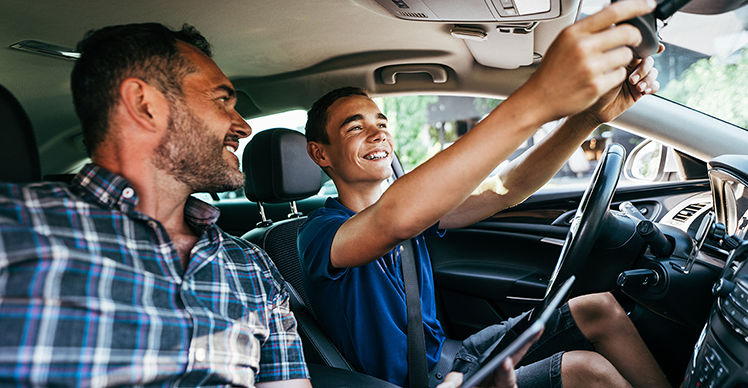
A simple conversation can save a life. Just having an open dialogue about safe driving with your children can help them understand the dangers on the road. And how to avoid becoming one themselves.
Dr Lisa Dorn tells us that we should be regularly talking about driving safely and encouraging open conversations rather than relying on lectures
And if your child points out an unsafe habit, acknowledge it and thank them for speaking up. This shows accountability and builds trust.
It’s also crucial to consistently demonstrate the safe driving behaviours you want them to adopt. Children learn more from what they see than what they are told. So drive the way you’d want them to.
One day, your kids might grow up to drive just like you. Make sure that’s a good thing. Always remember that every journey is a driving lesson. Teach them well.