

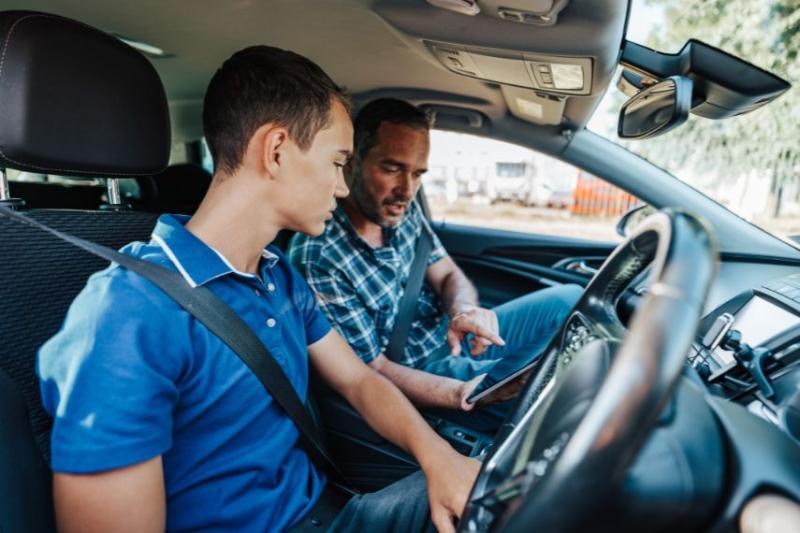
We caught up with the team at RED Driver Training to get their advice on how parents can support their children learning to drive.
From setting a good example behind the wheel, to reinforcing what they're taught in lessons, here are their top tips.
Your driving habits matter more than you think
Kids don't just start learning to drive when their hands touch the wheel for the first time. The truth is, they're watching you drive for years before that and picking up your habits.
As RED Driver Training says: "Children don't just listen to what we tell them. They watch what we do."
"Whether it's sticking to the speed limit, resisting the temptation to glance at your phone or being patient with other road users, these everyday behaviours leave a lasting impression."
"Passing the driving test isn't the finish line. It's the start of a lifetime of learning. That's why we encourage students, parents and experienced drivers alike to keep developing their skills and never stop learning."
Common misconceptions learner drivers arrive with
RED Driver Training says these are the misconceptions students arrive with, or the things they need to focus on most.
Speed
Students can arrive thinking they always need to keep up with the traffic around them.
At RED, they focus on helping them understand that the safest speed is one that:
- is within the speed limit
- is appropriate for the road and conditions
- lets them stop within a safe distance of others
Observation
As RED says, it's important to know that looking in a mirror isn't the same as acting on what they've observed.
Students need to understand:
- what they’re looking for
- what they can see
- how that should influence the decision they make next
Distractions
Mobile phones are a part of everyday life – and a lot of people don't go anywhere without it.
But as RED reminds students, "there's no place for using a hand-held phone while driving – including if you're stopped in traffic."
"Beyond the fact that it's illegal, good driving starts with giving the road your full attention."
A driver's attitude
The final thing is all about students' attitudes towards other road users.
They say: "Safe driving isn’t just about controlling the car. It’s about showing patience, courtesy and respect."
"Whether it’s giving someone time at a junction, allowing space for cyclists or simply choosing not to react to another driver’s mistake, these are all habits that help make the roads safer for everyone."
Can well-meaning parents accidentally teach bad habits?
For the most part, parents give advice because they really want to help. But RED Driver Training does say they see some students arrive with ideas that don't quite fit with modern driving training.
For example, keeping up with faster traffic, even if it means drifting over the speed limit, or underestimating the importance of good observations because there's nobody around.
RED says: "The aim isn’t to criticise parents or tell anyone they’ve been doing it wrong."
"It’s about helping students think for themselves, assess what’s happening around them and make safe decisions based on what they can actually see."
What can parents do to help?
RED Driver Training says: "If we could give parents just one piece of advice, it would be simple. Drive the way you'd like your child to drive one day."
That means:
- putting your phone away before you set off
- sticking to speed limits
- leaving plenty of space
- staying patient
- treating other road users with respect
Private practise can be really useful, but it works best when it's reinforcing what's being taught in lessons.
If an instructor has introduced a specific routine or technique, try to practise it the same way. Students make the best progress when parents and instructors work as a team.
They also mention that it helps to talk about your driving when you're making routine journeys. You could say things like:
- “I’m slowing down because I can’t see clearly around that bend.”
- “I’m waiting because I haven’t got a safe gap yet.”
RED says, "This shows future drivers good driving is about making sensible decisions – not just controlling the car."
How RED supports learners and their families
Over at RED, they encourage parents and carers to occasionally sit in on a driving lesson. Seeing a lesson first-hand helps them understand:
- what’s being taught
- the techniques being used
- how they can reinforce the same approach during private practise
They also have the Learn To Drive with RED app, which offers guidance for both the theory and practical tests. And parents can use these resources too!
Looking through them together can help everyone work towards the same goal.
How can experienced drivers break bad habits?
RED says that one of the advantages of driving for many years is the experience you build up. But the downside is that some habits become so familiar that you stop thinking about them.
Driving a little faster than the conditions really allow. Relying on experience instead of making thorough observations. Feeling tempted to glance at a mobile phone because “it’ll only take a second.”
They say it's worth taking the occasional step back and asking yourself, “would I be happy for a student to copy what I’ve just done?”
Here are the ways you can keep those habits in check:
- Be more conscious of your own driving – give yourself plenty of time for journeys so you’re less likely to feel rushed.
- Stay up to date with the Highway Code – rules can change, so it’s worth staying up to date with the Code.
- Consider a refresher lesson – it isn’t about starting again. It’s about recognising that we can all benefit from a fresh perspective from time to time.
RED says: "The best role models aren’t perfect drivers. They’re the ones who are still willing to learn."
"If we can all make that commitment, we’ll be helping shape safer drivers long before they ever sit behind the wheel."