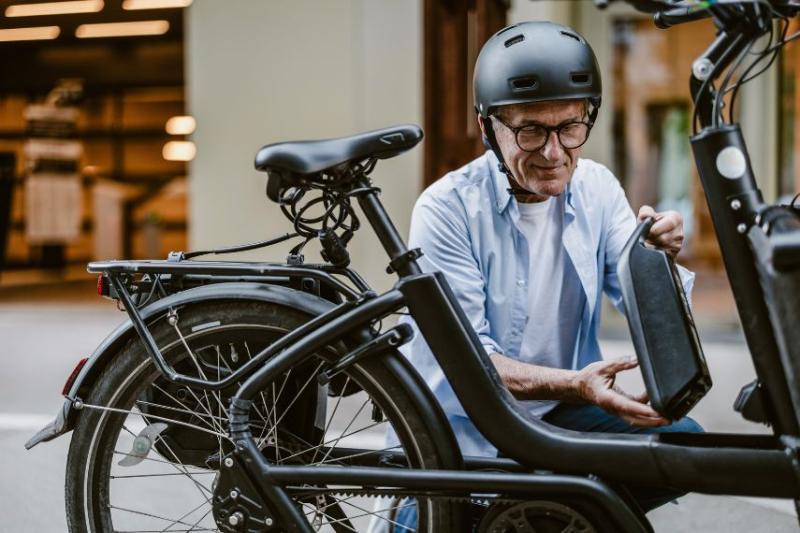
Whether you use them to get around or just for fun, it’s important to put safety first when riding an electric bike or scooter. Also known as an e-bike or e-scooter!
Here’s how to stay safe while riding, storing and charging them. Plus, a quick guide to rules in the UK.
Making sure you're using your e-bike legally
Most e-bikes are considered ‘electrically-assisted pedal cycles’ (EAPC). That means you have to follow these rules:
- You need to be at least 14 years old.
- The motor must have a maximum power output of 250 watts.
- The motor assistance must stop at 15.5mph.
- It must have pedals that can be used to power it.
- You can’t ride it on pavements.
If your e-bike doesn’t meet these standards, then it’s counted as a motorcycle or moped. That means you need to register, tax and insure it.
Making sure you're using your e-scooter legally
The rules around e-scooters are stricter than e-bikes, so make sure you’re clued up on what’s legal and what’s not.
Privately owned e-scooters
In the UK, you can only drive a privately-owned e-scooter on private land with the landowner’s permission.
Rental e-scooters
The only legal way to ride an e-scooter in public is as part of a rental scheme. These are available in some parts of the UK.
There are a few rules to be aware of when renting an e-scooter:
- You need to be 18 or over with a provisional or full driving licence that has a category Q entitlement.
- The maximum speed you can drive is 15.5mph, although this might be lower in some places.
- You can ride them on public roads and cycle lanes, but it’s illegal to ride them on pavements or a motorway.
- You must follow the same road traffic laws as other road users. Check out our guide on safely sharing the road with drivers.
Remember – you can be prosecuted for riding carelessly or while under the influence of drink or drugs.
Fire safety
E-bikes and e-scooters are powered by lithium-ion batteries. It’s rare for these batteries to cause fires, but it can happen.
To reduce the risk, make sure you follow our guidance for storing, charging and looking after your e-bike safely.
Check out GOV.UK’s advice on e-scooter fire safety too.
If you notice any signs of battery damage and it’s safe to, unplug it and move it away from anything that could catch fire.
If you see smoke or fire, move away and call the emergency services straight away.
How to make sure your batteries are safely charged
Here are a few tips for charging your e-bike or e-scooter batteries safely.
Charge in a safe place
Charge your batteries in a cool, dry place.
Avoid charging them overnight or when nobody is home, so you can act quickly if something goes wrong.
Use the right equipment
You should only use the manufacturer’s battery and charger.
Using a second-hand, imitation or imported one can be riskier. So, it’s best to stick to the approved gear.
Watch out for warning signs
Stop using the battery if it becomes damaged, overheats or starts to swell.
If you notice any of these things, it’s time to get a new one.
Don’t leave batteries flat
If you’re storing your e-bike or e-scooter for a long time, make sure the battery is fully charged before you put it away.
Checking your equipment regularly
Make sure you’re checking your gear on a regular basis, so you can spot and fix issues early.
Pre-ride checks
Before you set off, make sure that:
- the tyres are properly inflated
- the battery has enough charge for your journey
Regular maintenance
You should regularly:
- check for broken parts or signs of damage
- give it a good clean
- lubricate the chain and cables
Professional servicing
It’s best to get a professional service done every year – ideally every six months if you can.
How to secure your e-bike or scooter
Here’s how to store your e-bike or scooter safely.
Choose a high security lock
Buying a cheap lock might save you money in the short run, but it could cost you later on if it gets stolen.
Plus, a lot of insurers will only cover you for e-bike theft if you used a good quality lock in the first place. Check your policy documents to see which ones they recommend.
Lock the frame and wheels correctly
If you’re leaving your e-bike in public, secure it safely in a bike shed or a bike rack.
It’s a good idea to use an extra cable lock to secure the wheels as well as the frame.
Pick safe parking locations
You should store it in a locked building or secure area.
If you’re leaving an e-bike somewhere while you’re out and about, you should:
- lock it to an immovable object, like a post or bike rack
- choose a well-lit and busy area, ideally with CCTV close by
Add tech and tracking
A GPS tracker can help you find your e-bike or e-scooter if it’s stolen. Choose one that’s small, discreet and difficult to remove.
Take out removable batteries and accessories
Store your batteries and any accessories separately.
If you’re out, keep them with you rather than leaving them with the bike or scooter. If you’re at home, charge the battery indoors.
What safety gear should I wear on my e-bike or scooter?
Just like any other bike, you need to wear the right safety gear when riding.
Certified helmet
Your head is one of the most vulnerable parts of your body in an accident. That’s why a helmet is one of the most important pieces of safety gear you can wear.
Make sure it meets the EN 1078 safety standard, which every helmet sold in the UK needs to. It means it’s been tested and approved to use.
Gloves
If you fall, you might automatically put your hands out to stop yourself. Gloves can help protect them.
They can also keep your hands warm in colder weather, making it easier to stay in control.
High-visibility clothing
If you’re riding at night, it’s important you make sure you’re visible to other road users.
Wear a high-vis jacket and use reflective strips on your e-bike.
Sturdy footwear
Wear trainers or other sturdy shoes that can help you keep your balance and control while riding.
Joint pads and armour
You might think this is only useful for motorcycle riders – but it applies to e-bike and scooter riders too.
Knee or elbow pads and other protective gear can help protect you from serious injuries if you fall or crash.
Is my e-bike or scooter covered on my insurance policy?
It depends on your insurer.
With us, your e-bike is covered on your home insurance policy, as long as it:
- doesn't need a licence to be used on the road
- has a maximum motor power of 250 watts
- has a maximum assisted speed of 15.5mph
If your e-bike is worth £350 or more, you’ll need to tell us if you want it covered up to the full amount.
Find out more about our bicycle cover.
Policy limits and exclusions apply, so check your policy documents for full details.
E-scooters
We don’t cover e-scooters because they’re classed as motorised vehicles.
You can’t insure a privately-owned e-scooter to use in public, as it’s illegal to drive them on public roads.
But if you use one on private land, you can look at specialist insurance to cover you for things like damage or theft.