

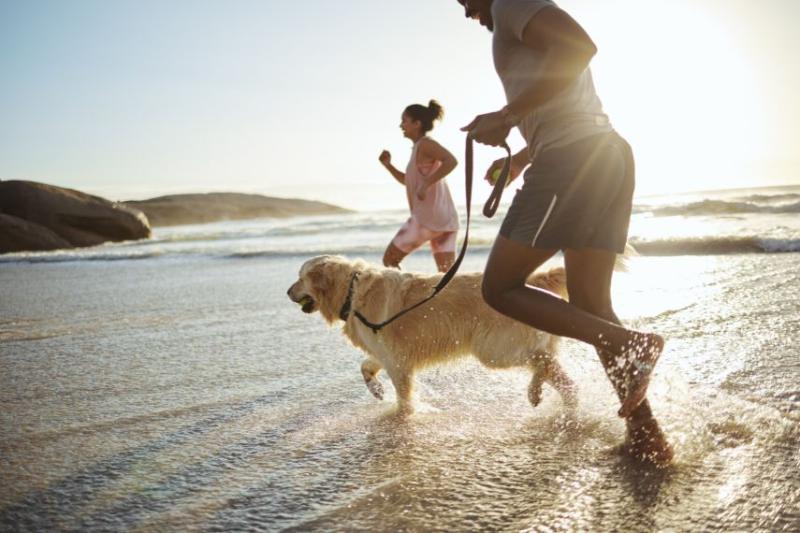
There’s nothing like a long walk on the beach with your four-legged friend.
Here are some of the best dog-friendly beach walks across the UK. Plus, some handy tips to keep them safe while you’re out and about.
Dog friendly beaches in Wales
Wales is home to some of the most beautiful coastlines in the UK – here are some of the top spots to take your furry friend.
Barafundle Bay, Pembrokeshire
With gorgeous views, golden sand and calm waters for your pup to swim in, we’re starting off strong.
Heads up – the walk down to the bay can be a little uneven and there are sheer drops by the cliff edge. So, keep your dog on a lead to be safe.
Rhossili, Gower
Probably one of Wales’ best-known beaches, Rhossili offers breathtaking views and three miles of coastline to walk along.
Dogs are allowed all year round, making it the perfect spot for a wintery walk too – if you’re happy to brave the cold.
Manorbier Beach, Tenby
Manorbier Beach in Tenby is a stunning surfer destination, so it’s a great people-watching spot.
Just remember – it's popular with surfers because of its strong currents, so don’t let your dog swim too far out.
Poppit Sands, Pembrokeshire
Poppit Sands is just outside of Cardigan, where the Afon Teifi meets the sea. With expansive sands and lots of rock pools to explore, it’s a great spot to walk your curious canine.
Between 1 May and 30 September, dogs aren’t allowed on the western end of the beach so keep an eye out for signs.
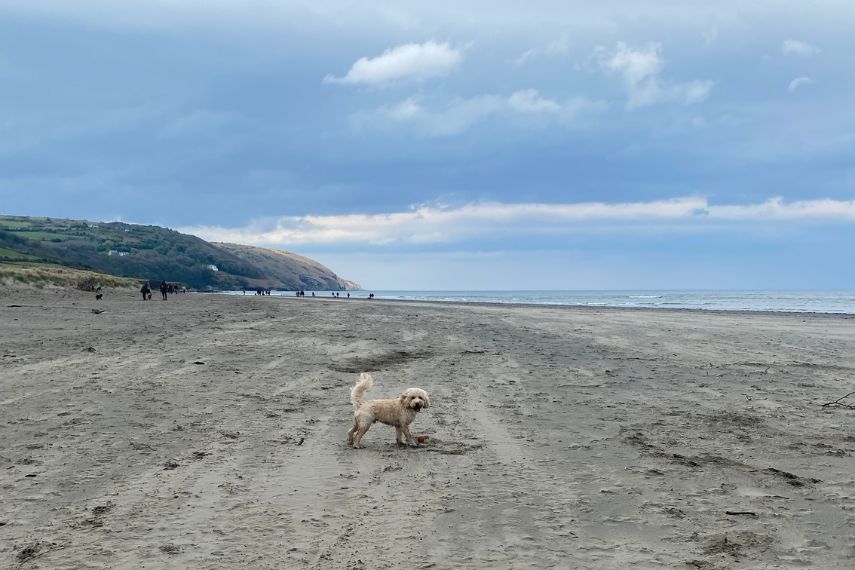
One of our very own Admiral dogs, Neville, having a splash at Poppit Sands!
Dog friendly beaches in England
England’s coast offers lots of variety – here are some of our top picks for dog-friendly walks.
Fistral Beach, Newquay
One of the most-well known surf spots in England, Fistral Beach has more than earned its popularity with long golden beaches and great facilities.
And what’s even better – dogs are welcome all year round.
Its popularity means it tends to be busier, so if you’re looking for a quieter spot, you might be better off looking elsewhere.
Perranporth, Cornwall
Another well-known spot, Perranporth offers three miles of expansive sand surrounded by dunes.
Dogs are allowed all year round, but you’ll need to keep them on a lead between 10:00am and 5:00pm in July and August on the main beach.
Saunton Sands, North Devon
With three miles of coastline to enjoy, Saunton Sands is a firm favourite of dog walkers in Devon.
There are some restrictions on certain parts of the beach in the summer months, so check the signs to be safe.
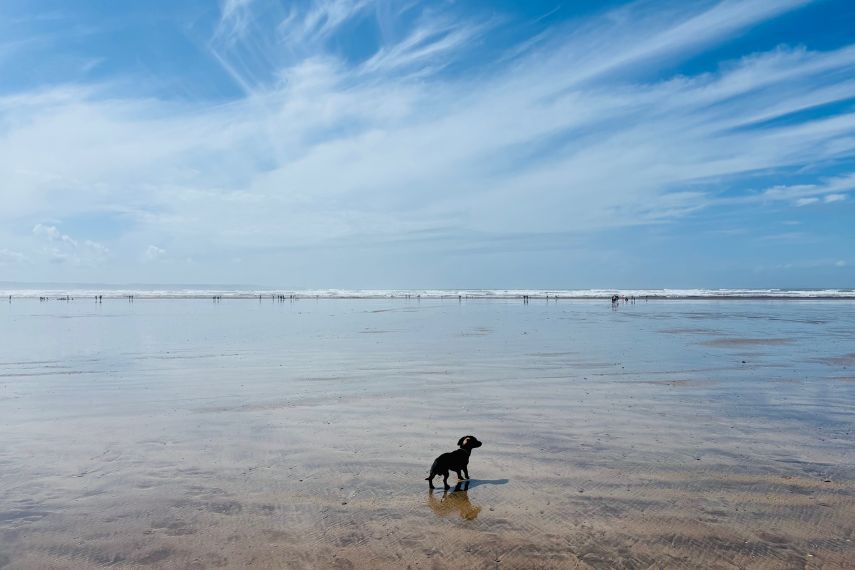
Another of our lovely Admiral dogs, Sizzles, enjoying his day out at Saunton Sands.
Holkham Beach, Norfolk
One of the most scenic beaches in England, Holkham Beach has even been featured in films and TV shows thanks to its unparalleled views.
It also borders a nature reserve – so if the sun is too hot, you can always divert to a woodland walk for some shade.
You’ll just need to keep your dog on a lead in the reserve to avoid disturbing the rare wildlife and plants.
Dog friendly beaches in Scotland
Though the weather can be unpredictable in Scotland, you’ll find some of the UK’s most beautiful dog-friendly beaches here. Maybe remember to pack a raincoat, just in case!
Calgary Beach, the Isle of Mull
Calgary Beach is home to lots of wildlife including seals and sometimes otters. If you do see any of them out and about, make sure to keep your dog on a lead to avoid disturbing them.
Beyond that, its lovely white sands are perfect for your pup to run and play on.
Balnakeil Beach, Durness
Balnakeil Beach is one of the most remote spots on our list – so it’s a great choice if you and your furry friend want some peace and quiet.
With clear water and a long stretch of sand, your dog can really run free.
Sandwood Bay, Sutherland
Another remote spot, Sandwood Bay is only accessible by a 4.5-mile walk – but it’s worth the trek for the spectacular views.
Dogs are welcome all year round, so if you have an active dog who loves to run, this might be the spot for you.
Staffin Bay, the Isle of Skye
The Isle of Skye is well-known for its breathtaking landscape and beaches. While you’re spoilt for choice, Staffin Bay is a top pick for dog lovers.
Just one thing to be aware of – you’ll need to keep your dog on a lead if there are any livestock grazing nearby.
Dog friendly beaches in Northern Ireland
From more popular spots to tucked-away bays, there’s no shortage of dog-friendly beaches in Northern Ireland.
Portstewart Strand, County Londonderry
One of Northern Ireland’s most striking beaches, dogs are welcome all year round here. Although they need to be on a lead between posts 1 and 10 to protect nesting birds and grazing cattle.
This two-mile beach is backed by 6,000-year-old dunes and is protected by the National Trust.
Ballycastle Beach, County Antrim
From Ballycastle Beach, you can see all the way across to Scotland on clear days.
Just be aware there are some restrictions on bathing areas between 1 June and 15 September.
Ballyholme Beach, County Down
Close to Belfast, Ballyholme beach is a sheltered bay with quiet waters for your pup to swim in.
There are no seasonal restrictions, but there are a few areas where you’ll need to keep your dog on a lead.
Millisle Lagoon, County Antrim
Again, Millisle Lagoon is an enclosed spot, so the waters are much calmer if your dog (or you!) fancy a swim.
It’s a quieter beach in general, so a great choice if you fancy a more peaceful dog walk.
Beach hazards for dogs
We hope your beach days are filled with zoomies and sunny weather. But it’s important to remember there are a few hazards to be aware of:
- Saltwater poisoning – if your dog drinks a lot of seawater, they could get saltwater poisoning. So, make sure you always keep an eye on them when they’re in the sea.
- Sand impaction – this is when your dog eats so much sand that it makes a blockage in their stomach.
- Eating seaweed, dead fish or shells – watch out for what they’re eating at the beach. If you see them chewing something you don’t recognise, it’s best to stop them.
- Tides – your dog might love swimming, but it’s important to remember currents can be strong. Make sure they don’t swim out too far.
- Cliffs – some coastal walks have high cliffs and steep drops. If you’re close to the edge and there’s no barrier, keep your pup on the lead to be safe.
- Quicksand – this is when sand mixes with water to create a sinking mud. There should usually be signs to show where areas are, so it’s best to avoid them or keep your dog on a lead.
Beach safety tips for coastal dog walks
Here’s how to keep your four-legged friends safe on the beach.
Paw protection and hot sand
Check the sand isn’t too hot before you bring them onto the beach, as it could really hurt their paws.
If it’s too hot for you to stand in barefoot – it's too hot for them too.
Keep them hydrated and avoid overheating
On really hot days, your dog could be at risk of heat stroke.
It’s best to:
- avoid walking them in the hottest part of the day, usually between 10:00am and 3:00pm
- bring a water bottle and portable bowl so they always have access to water
If you think your dog is overheating, you should:
- move them to a shaded area
- use cool water to pour over their body and for them to drink from – make sure it’s not ice cold
- get a cool, wet towel for them to lay on and replace it often – don't cover them in one as it can trap the heat
- go to the vet if they’re showing signs of heatstroke – for example, drooling, weakness, excessive panting, confusion or vomiting
For more useful tips, read our guide on keeping your dog safe in hot weather.
Sun protection
Breeds with light fur or short coats can be more at risk from sun damage.
You might want to look at buying a doggy sunscreen for those sensitive spots like their nose or ears.
Water safety
Like we said, there can be strong currents and tides at the beach.
Make sure you’re always watching your dog in the water and recall them if they’re going too far.
It’s also a good idea to check tide times before you head out for your walk, so you know what to expect.
Check out our guide on keeping your dog safe in water for more info.
Head over to our pet health hub to find out more about keeping your pet happy and healthy.
Protect your pooch with pet insurance
We hope your beach days go off without a hitch! But if your pet does end up with a heat-related illness, or something else goes wrong, it’s good to have a safety net.
That’s where pet insurance comes in. It can help you with the cost of vet bills, so you can focus on getting your furry friend better.
There are some limits and exclusions, so always check your policy book to know what you’re covered for.