
Interested in making the switch to an electric vehicle (EV), but feeling a little unsure? There are some common myths out there, about everything from driving range to health and safety concerns.
To help fact-check some of these misconceptions, we’ve worked with Professor Peter Wells. He’s the Professor of Business and Sustainability at Cardiff University and Director of the Centre for Automotive Industry Research.
While he’s not directly quoted in the article, he’s helped us separate fact from fiction with his expertise.
So, here are 12 common EV myths – and the truth behind them.
Myth 1: EVs aren’t good for long distances
Context matters when it comes to EVs and their mileage ranges.
The table below shows the average range of some popular EV models in the EV database. This includes top-of-the-range to mid-range models.
| EV model | Average range (miles) |
|---|---|
| Mercedes-Benz EQS 400 | 415 |
| Volvo EX60 P12 AWD | 375 |
| Polestar 5 Dual Motor | 360 |
| Tesla Model 3 Performance | 320 |
| Kia EV4 Hatchback 81.4 kWh | 310 |
| Audi SQ6 Sportback e-tron | 305 |
| Volkswagen ID.3 Neo 79 kWh | 300 |
| Škoda Enyaq Coupe 85 | 290 |
| Kia EV6 RWD | 280 |
| Hyundai IONIQ 5 84 kWh AWD | 275 |
| Nissan Ariya 87 kWh | 275 |
| Peugeot e-3008 73 kWh | 235 |
| Mini Countryman SE ALL4 | 235 |
| Vauxhall Astra Electric 58 kWh | 210 |
There’s no doubt that an EV’s range can vary a lot depending on which model you buy. But even the Vauxhall Astra Electric’s 210 miles can get you from Bristol to Oxford and back.
According to YouGov, 69% of Brits drive under 20 miles a day. This comes to a maximum of 140 miles travelled weekly.
So, a mid-range EV could give most people over two weeks of driving.
On average, an EV can travel up to 241 miles in real-world conditions.
So, even if you drive more than 20 miles a day, you’ll probably only need to charge about once a week – though this depends on things like speed, weather and driving style
Also, batteries and infrastructure are always improving, which means better ranges and performance.
Myth 2: Electric cars are too expensive
It can be more expensive to buy electric cars upfront than a petrol or diesel car. But this depends on the model you go for, as there are now plenty of EVs on the market that are priced similarly to mid-range petrol cars.
EVs can also cost less overall, thanks to cheaper running costs. This is because it costs less to charge an EV than it does to fill a petrol or diesel car’s tank.
Maintenance costs are generally less because there are fewer moving parts, which means less can go wrong. Electric vehicles don’t need oil and can go longer between services – just make sure you stick to your EV’s suggested service window to be safe.
Plus, they get less wear and tear on things like brake pads and discs because of their regenerative braking. But of course, wear and tear does still happen to EVs, like any other car. So you will have to sort out maintenance from time to time.
Myth 3: You need specialist insurance
Don’t worry, most insurers offer cover for EVs. Whether that’s as a specialist product, or just part of their standard car insurance.
Make sure your EV insurance includes the most important things, like cover for your battery and charging cables.
If you’re still shopping around, we might have the right cover for you. Our comprehensive EV insurance includes everything you’d get in our usual car insurance, plus:
- charging cable cover
- battery cover
- wallbox cover (up to £1,000)
- out of charge recovery
We’ve also got a great EV benefits platform, powered by Zoom EV.
Just a heads up, we don’t offer out of charge recovery or wallbox cover for plug-in hybrids (PHEVs). Mild hybrids will only have battery cover.
Don’t forget that limits and exclusions always apply here, so check your policy book to see what you’re covered for.
Myth 4: EVs use more energy when the weather’s cold
This is a myth and a truth at the same time.
EV batteries runs on chemicals, and chemical reactions are usually slower when temperatures are lower.
That means EVs can take longer to heat up – usually five to ten minutes.
Petrol or diesel cars heat up faster but are actually less efficient overall, as they give off more waste heat.
After you get home, plug your EV into your home charger for a few hours to help the battery manage its temperature more effectively (as suggested by Connected Kerb). This can help boost driving range.
When it comes to hotter temperatures, both EVs and petrol or diesel cars can be affected. Keep an eye on your EV in hot weather and try to keep it in a shady spot.
Myth 5: Using heating/air con/wipers/radio drains your battery quicker
Your radio and wipers won’t always drain your battery quicker, as a lot of EVs use the smaller 12V battery which isn’t used for driving range.
However, heating and air-conditioning can drain your EV’s larger battery.
But the same goes for petrol and diesel cars, so EVs aren’t unique here. It’s just more noticeable in an EV because the available range on your display will fall.
Many EVs have an eco-mode to reduce acceleration, which makes braking more efficient. Some EVs also have heat pumps to prevent the heating from draining the battery as much.
This means you can heat up your car and use other systems without draining the battery quickly.
Myth 6: EVs lose charging capacity over time
This is somewhat true, but it isn’t a significant amount.
According to a 2025 GeoTab study, EVs lose an average of 2.3% of their full charging capacity each year.
Check the remaining battery capacity if you’re buying a used EV. If the battery capacity falls below 70% of the original capacity, it’s probably not worth it.
EVs can also lose a little bit of charge if you don’t use them for a while. To avoid this, you should:
- charge the car to between 50% and 80% capacity
- put the car in “deep sleep” or hibernation mode
Also, avoid parking your EV in extremely hot spots. This can heat up the cabin and affect the battery’s performance, especially if you’re always using the air conditioning to cool the car down.
For example, you should try to avoid leaving your EV in direct sunlight on very hot days.
Many manufacturers also offer a battery warranty of up to 8 years or 100,000 miles (whichever you hit first), so make sure you check this before buying.
Myth 7: EVs aren’t powerful enough to tow trailers and caravans
Not all EVs have been tested or approved for towing yet, but many have. A lot of electric Kia, Audi and Hyundai models have been approved to tow, as well as Teslas.
If it’s something you’re interested in, make sure you check an EV has been approved before buying.
Myth 8: There isn't enough power in the grid to charge every EV
Right now, there’s enough energy in the UK to charge every electric vehicle. But like most things, demand and capacity can shift over time.
According to ZapMap, there are now over two million electric cars on the road in the UK, and more chargers are being installed to meet this demand.
There are currently over 120,000 public EV chargers in the UK, compared to only 60,000 petrol pumps (according to the UK government).
What’s more, ZapMap reported that there were 1.4 million home chargers installed across the UK at the end of 2025. Like public chargers, the electricity demands of home chargers are being met too!
As more of us switch to electric appliances like induction hobs, heat pumps and electric radiators, electricity demand will also rise.
Suppliers plan for this, so they can handle higher usage without needing new power sources.
Some EVs can also store energy to sell back to the electric grid, which makes them even more energy efficient.
Myth 9: It's not safe to drive an EV in the rain or through a car wash
There’s no need to worry. Electric vehicles' battery packs and electrical systems are sealed and isolated, meaning they’re protected from the elements.
Plus, EVs must go through the same safety and crash testing as any other vehicle.
Myth 10: EVs can cause explosions or fires
Energy Saving Trust found that EVs only have a 0.0012% chance of catching fire, compared to a 0.1% chance for petrol and diesel cars.
Battery fires can happen after EV collisions. But drivers and passengers are usually safe in an EV.
What to do if you experience an EV battery explosion
Call the emergency services as soon as you notice a battery fire, explosion or leak.
You shouldn’t try to put out the fire yourself, as battery fire is difficult to handle.
If you’re charging at home, your home’s electricity system should cut off if your EV catches fire.
You shouldn't drive with a damaged battery either. Call a professional if you want to transport an EV battery so it’s done safely.
Myth 11: Electric car batteries take too long to charge
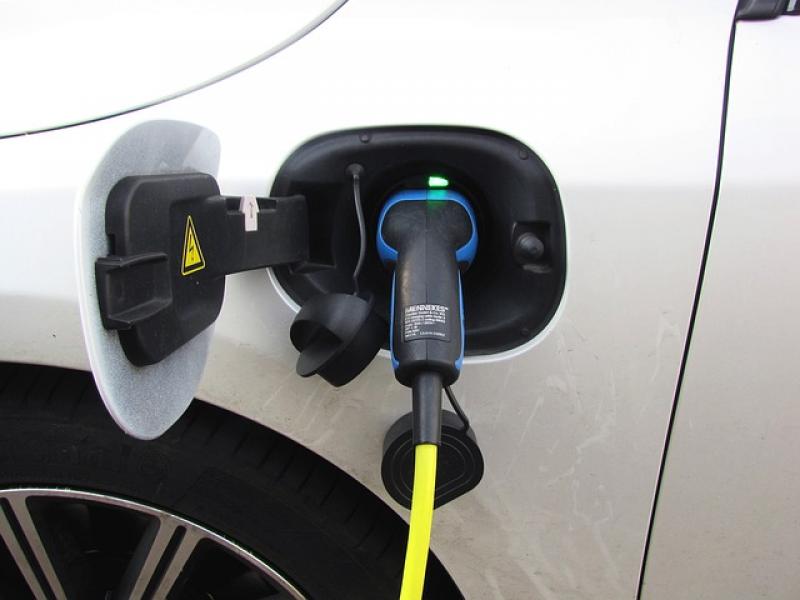
EVs do take longer to charge than a typical car does to fuel. But how long an EV takes to charge all depends on what kind of charger you’re using.
According to PodPoint, a 50kW charger can give an EV 100 miles of range in around 35 minutes.
Here’s what kinds of chargers are best at different times:
- 7kW (most commonly found in homes) are best for an overnight charge
- 22kW (usually found in supermarket and shopping centre car parks) are good for a top-up
- 50kW/100kW/150kW are the best options on a journey
Myth 12: EVs are too heavy for multi-storey car parks
This isn’t true – these car parks are built to withstand much bigger loads than even the heaviest EV.
On average, an EV weighs 200-300kg more than a petrol car because of the weight of the battery and electric motors.
But large petrol or diesel cars are very popular now, and they weigh more than average-sized EVs (which sit at around 2,000kg or around 4,500lbs).
Recurrent has a useful table on the weight of some well-known EVs if you want to look more into the specific numbers.
Structural engineers have even voiced concerns over the increasing size of new cars and how this affects older car parks. Time will tell if these concerns change how car parks are made or managed.