
Being a landlord is about more than just taking rent from your tenants.
It means looking after your property and staying on top of your responsibilities to protect your tenants.
Whether you’re a seasoned landlord or new to the letting game, read our helpful guide on what makes a good landlord.
What should a good landlord provide?
Doing things the right way can make sure you have a good relationship with your tenants – and protect your property.
A safe place to live
It goes without saying that your property should be safe for people to live in. Make sure your property meets legal standards, including gas and electrical safety checks, and that the fire alarm works properly.
Quick response to repairs
Whether it’s leaks, frozen pipes or broken appliances, a good landlord always fixes issues quickly before they become a bigger problem.
Respect and fairness
Treat your tenants how you would like to be treated. You can help maintain a good relationship by doing things like giving them plenty of notice before visiting and respecting their privacy.
Why is looking after your property important?
It’s really important to make sure your property is in a safe and liveable condition.
Not only does it protect your property’s value, but it helps stop bigger and more expensive problems later. And, most importantly, looking after your property protects your tenants too.
You can help look after your property by:
- keeping the property in good condition – checking for things like leaks, damp and mould
- fixing issues before they get worse
- maintaining floors, walls and fixtures
- making sure appliances work and are safe to use
How can landlords manage their finances well?
Managing your finances well helps protect you if something goes wrong. For example, if your boiler breaks and you need to pay for a new one, or if your tenant doesn’t pay rent on time.
It also helps make things less stressful for you. A few good habits to make include:
- having an emergency fund to cover you for things like repairs, if your property is empty or if rent is late
- keeping records of rent payments, repair costs and any extra expenses
- covering legal costs like tax and insurance
What are the most common landlord challenges and how can you overcome them?
Not all landlords have an easy ride when it comes to letting out their properties. And there are a few common hurdles that you might face too.
But don’t worry, we’re here to share some advice on how to overcome them.
Rent arrears
Late payments, known as rent arrears, happen when a tenant falls behind on their payments. If your tenant is struggling to keep up with rent, you could:
- contact them early to understand the issue
- offer a short-term payment plan if you can
- keep a record of all payments and communications, so you know how much rent they’ve paid
You can find more help with late payments in our landlord’s guide to dealing with rent arrears.
Property damage
Accidents can happen. While there’s no way of avoiding them, you can reduce the risk of damage to your property by:
- carrying out regular inspections
- fixing issues before they get worse
- making it clear to tenants what counts as damage vs wear and tear in the property (this way, your tenants will know what they can and can’t report as damaged)
Deposit disputes
It’s not uncommon for landlords to have disagreements over deposits, especially towards the end of the tenancy.
There are a few things you can do to protect yourself and keep everyone happy:
- Take clear photos before your tenants move in and after they move out
- If you have to take any money from the deposit, be transparent and explain why, what the charges relate to and how you've calculated them
- Use a government-approved deposit protection scheme to keep everyone’s money safe (this is a legal requirement)
Noise complaints and lease violations
Talking about complaints isn’t easy, but we want to help you feel empowered to handle them the right way.
If you get any noise complaints from neighbours or your tenants break their tenancy agreement, it helps to:
- talk about the issues straight away
- refer to your tenancy agreement if you need to
- remember to stay professional and respectful
How can good communication make you a good landlord?
Good communication is everything when it comes to being an excellent landlord. It helps build trust and respect between you and your tenants. Plus, it encourages them to look after your property.
Tenants really value landlords who:
- listen to their concerns
- are easy to contact
- fix issues quickly
Stay up to date with your legal responsibilities
It’s worth knowing what you and your tenants are responsible for, so you can try to avoid any disputes.
At Admiral, we’re always keeping up to date with the changes in legislation to help you stay on top of your responsibilities.
Our guide covers all the recent changes to the Renters’ Rights Act. We have plenty more guides on landlord legal responsibilities too.
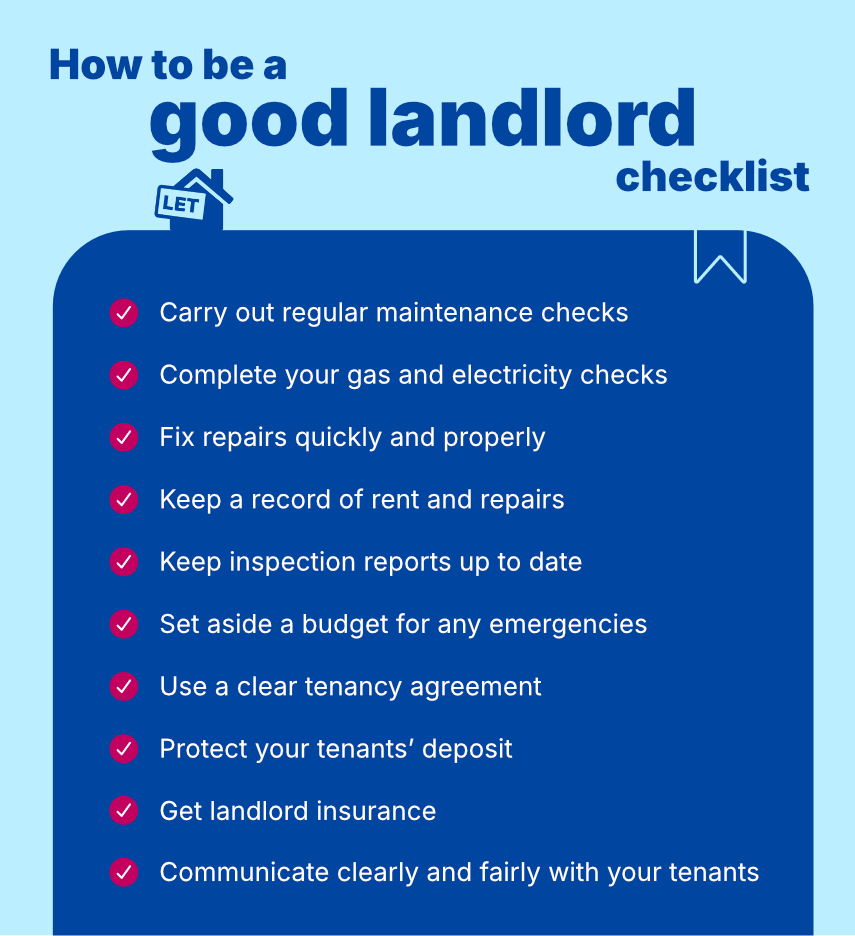
Your landlord checklist
All set? Make sure you tick off these final checks to earn your top landlord status! We might ask for some of these if you need to make a claim.