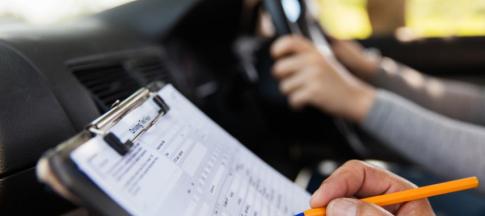


In January the government announced a new road safety strategy – but what does it actually mean for drivers?
Here are some of the new changes that have been put forward and how they could affect you.
What’s changing and why?
The government’s new road safety strategy includes lots of new proposals to keep people safe on the road.
Lots of the ideas are in the very early stages, which means we probably won't see them happen for a while yet.
But the plans range from lowering drink driving limits to bringing in mandatory eye tests for drivers over the age of 70.
What does the government's road safety strategy aim to do?
The new strategy is all about doing more to keep drivers, passengers and pedestrians safe.
The government published their last road safety strategy back in 2019. Since then, over 8,000 people have sadly died in road accidents.
The plan is to reduce the number of people killed or seriously injured on UK roads 65% by 2035.
Drink driving: what’s the potential new limit?
At the moment, the drink driving limit is 80mg of alcohol per 100ml of blood. But the transport department has proposed some new limits:
- For learner drivers and anyone who’s recently passed their test: the limit would be lowered to around 20mg.
- For all other drivers: the limit would be lowered to around 50mg.
Check out our guides on drink driving and drug driving for more info.
‘Zero tolerance’ limit
The proposed new limit for learner or new drivers is close to a ‘zero tolerance’ policy, as it’s so low.
People process alcohol differently based on their weight and age, so it’s tricky to say how much alcohol it actually translates to.
But remember, it’s always safest to not drink any alcohol at all if you’re driving.
Alcolocks
An ‘alcolock’ is basically a device which means a car can’t start unless the driver passes a breath test. It’s a way of checking they’re below the legal alcohol limit.
Lots of different countries use them, including the USA and Australia.
The idea is that people caught drink driving might only be allowed to drive again if they fit an alcolock in their car.
Learners: how could the minimum learning period impact new drivers?
Young and new drivers make up a lot of the people involved in serious accidents. In fact, Brake found that one in five drivers crash within a year of passing their test.
The government is proposing some new rules around learning to drive that will hopefully bring those numbers down.
How driving rule changes could affect learners
Right now, learner drivers can book a practical driving test as soon as they get their provisional licence and pass their theory test.
But the government wants to introduce a minimum six-month learning period between the theory and practical tests.
The idea is to make sure young drivers are confident and capable behind the wheel before they drive on their own.
A few other countries use a system like this right now, including Australia. Learners log the number of hours they’ve done and need to hit a certain amount before they can book a test.
Your ride, your rules
At Admiral, we care about protecting young drivers on the road.
That’s why we ran a campaign last year to empower young people – drivers and passengers – to speak up when it comes to road safety.
Older drivers: why eye testing requirements could change
The new strategy doesn’t just focus on young drivers. Around 6.3 million people aged 70 or over have driving licenses in the UK, according to the Driver and Vehicle Licensing Agency (DVLA).
Unfortunately, your eyesight tends to get worse as you get older. And a big factor in a lot of accidents and collisions is poor or failing eyesight.
It means you’re less aware of other drivers and hazards on the road.
Mandatory eye testing for over 70s
The idea is that drivers aged 70 or over could be asked to get an eye test every three years to keep their licence.
People in this age group need to renew their licence every three years anyway, which involves confirming that their eyesight is okay.
But right now, they don't have to give any proof. That means people could be ignoring warnings that their eyesight isn’t quite up to the task anymore.
Mandatory eye tests would hopefully get around this.
Stay safe on the roads
At Admiral, we’re invested in making UK roads safer for everyone. But we also understand accidents can still happen.
Remember that you’re legally required to have at least Third party only car insurance. It’ll pay out to the other people involved in an accident, but you won’t be able to claim for damage to your car.
If you want more cover, you can also choose Third party, fire and theft or comprehensive car insurance. They include more benefits and higher limits.
Whoever you’re insured with, there’ll be some policy limits and exclusions. Always check your policy book carefully to see what is and isn’t covered.